
Introduction
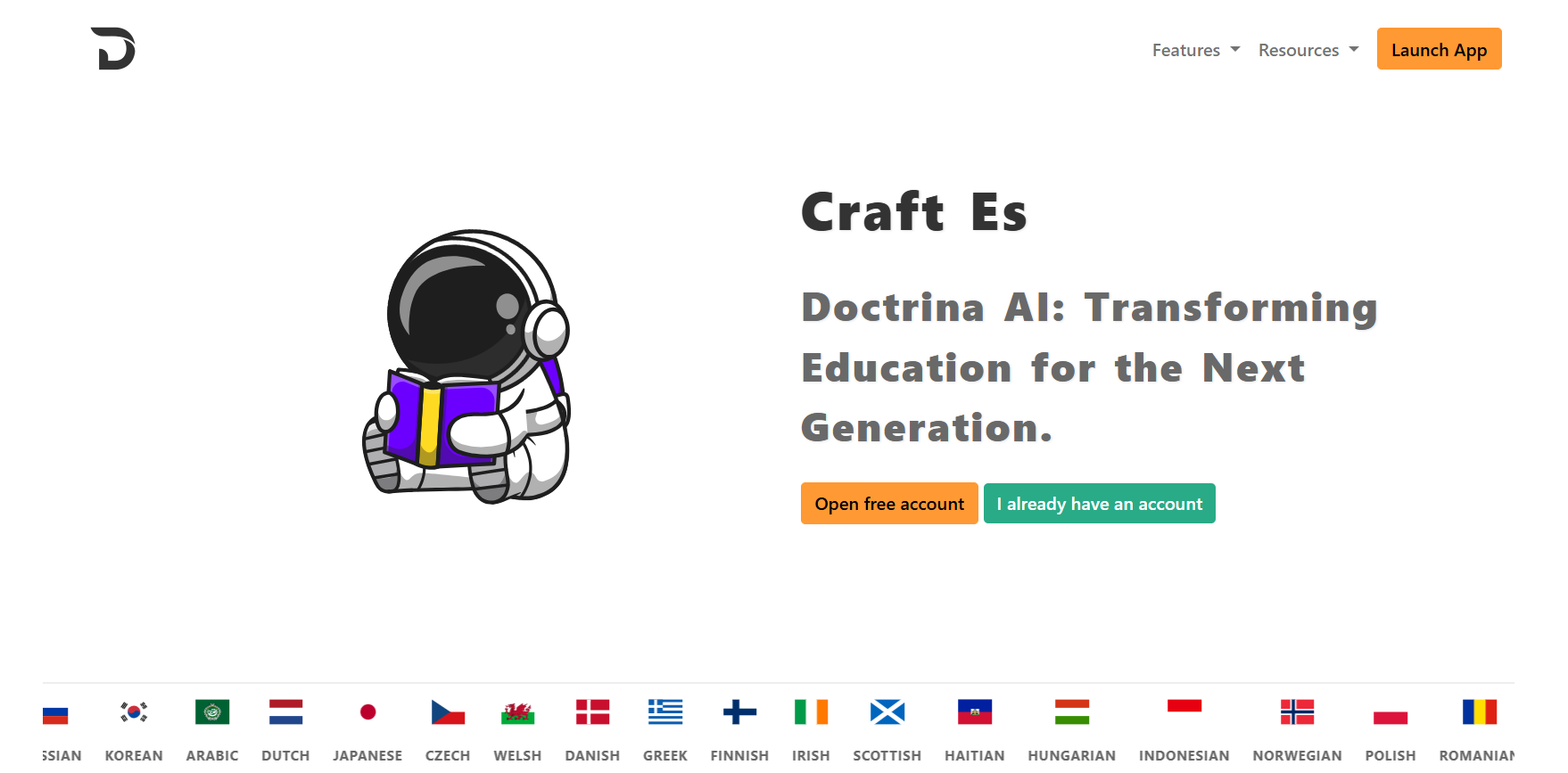
Doctrina AI is a platform that helps companies administer their business processes, including analysis of information and processing of documents, through an artificial intelligence (AI) platform that applies machine learning (ML) and natural language processing (NLP) to simplify the tasks handled by employees and/or themselves through efficient use of their organization’s resources.
Companies utilize Doctrina AI’s services to increase employee productivity, process large volumes of information, and automate tasks within the company and/or for workers who generate documents.
What is Doctrina AI?
The software platform called Doctrina AI employs cutting-edge artificial intelligence methods for analyzing vast quantities of data and producing documentation in an automated and highly efficient manner. It utilizes machine learning techniques to identify patterns in data and employs natural language processing to understand and interpret data in a text-based format.
The purpose of Doctrina AI is to assist corporations in obtaining ‘structured’ data knowledge from unstructured data and/or to provide them with the capability of automating the generation of documents that typically have numerous documents associated with them, i.e., contracts, reports, internal records, etc.
Explore this Tool: Study Fetch
Key Features of Doctrina AI
1) The Process of Analyzing Data – Structured data and unstructured data are analyzed to generate insights.
2) The Process of Documenting Sampling Processes – Identifying, organizing, classifying, or analyzing various types of information from different types of documents.
3) Natural Language Processing – Interpreting text-based data to provide actions based on this information.
4) Machine Learning Algorithms – Utilizing machine learning algorithms to improve the accuracy of information over time.
5) Workflow Automation – Automating repetitive tasks in relation to handling data and documents.
6) Integration – Connecting with current enterprise systems and databases.
7) Reporting and providing Insights – Providing detailed reports that can assist and support year-end decision making.
Explore this Tool: Abhyas ai
Pros & Cons of Doctrina AI
Pros:
- Using ML & NLP together
- Processing large amounts of information at once.
- Minimising time spent processing documents manually.
- Increasing how smoothly an organisation’s internal processes function.
- A solution for companies looking to use automation within their operations.
Cons:
- Onboarding with the product may be required for new users.
- Products may not be within the financial reach of many small companies.
- Depending on the installation requirements, onboarding and setup take time.
- Advanced features may need some technical integration to work properly.
How to Use Doctrina AI?
Step 1: Create an Account
Register your organization on the platform.
Step 2: Upload Data or Documents
Import structured data files or upload documents for processing.
Step 3: Configure AI Models
Select analysis settings or enable ML-driven workflows.
Step 4: Run Analysis
Allow the system to process and extract insights.
Step 5: Review Reports
Access structured outputs, reports, or automated results.
Who Can Use Doctrina AI
- Enterprises handling large datasets
- Operations teams managing document workflows
- Data analysts seeking automation
- HR and legal departments are processing contracts
- Organizations aiming to reduce manual processing time
What Makes Doctrina AI Unique?
The features of Doctrina AI are impressive because it combines ML algorithms and NLP capabilities into the same platform. Rather than providing separate, automation-related features, it combines them into one end-to-end solution to allow you to manage your documents and data throughout their lifecycle.
It can also manage both structured and unstructured data, making it a great fit for organizations that have challenging information environments to deal with.
Pricing & Plans
Doctrina AI typically offers tiered pricing models based on:
- Volume of data processed
- Number of users
- Feature access level
- Enterprise requirements
Custom enterprise plans may be available depending on integration and scalability needs. Users should contact the platform directly for updated pricing information.
Doctrina AI Comparison
Doctrina AI vs UiPath
| Feature | Doctrina AI | UiPath |
| Core Focus | AI-driven data & document processing | Robotic Process Automation (RPA) |
| Machine Learning | Built-in ML models | Available via add-ons |
| NLP Capabilities | Integrated NLP features | Limited native NLP |
| Document Analysis | Yes | Yes (with automation bots) |
| Best For | Data-heavy workflows | Task automation across apps |
Key Difference: Doctrina AI focuses more on AI-based data understanding and document intelligence, while UiPath specializes in robotic process automation across software systems.
Doctrina AI vs Zapier
| Feature | Doctrina AI | Zapier |
| Automation Type | AI-powered workflow automation | Trigger-based app automation |
| Data Analysis | Advanced ML-based insights | Basic data transfer |
| Document Processing | Yes | Limited |
| Target Users | Enterprises & data teams | SMBs & marketers |
| Complexity Level | Medium to High | Low to Medium |
Key Difference: Zapier connects apps through simple triggers, whereas Doctrina AI focuses on deeper data processing and AI-driven insights.
Final Thoughts
Organizations that need AI-based document automation and analysis can benefit from a tool like Doctrina AI, which is used as a solution to many organizations’ data issues, and is mostly beneficial to businesses, but works well in both environments. It does have some limitations and will not support casual users; careful planning is needed when implementing the product, but it does allow for improved organizational efficiency and the ability to manage structured data from many departments.