Choosing the best programming language for AI can significantly impact your development speed, project success, and career trajectory. As artificial intelligence continues to reshape technology in 2026, developers face an expanding selection of languages optimized for machine learning, deep learning, and AI applications. This comprehensive guide explores the top AI programming languages, helping you make informed decisions for your AI projects.
What Makes a Programming Language Ideal for AI?
Before diving into specific languages, understanding what makes an AI programming language effective is crucial. The best language for artificial intelligence should offer robust libraries for machine learning frameworks, efficient processing of large datasets, strong community support, and seamless integration with AI tools and platforms.
Modern AI development languages in 2026 need to handle complex mathematical computations, support neural network architectures, and provide excellent performance for training and deploying models. The ideal artificial intelligence programming language balances ease of use with computational power, making it accessible for beginners while remaining powerful enough for advanced applications.
Why Choosing the Right AI Programming Language Matters?
The programming language you choose directly impacts:
- Learning speed
- AI model performance
- Scalability
- Job opportunities
- Development cost
Different programming languages used in AI serve different purposes. There is no one-size-fits-all solution—but there is a best language depending on your goal.
Top Programming Languages for AI in 2026
Here are the top AI programming languages dominating in 2026:
- Python
- Java
- C++
- R
- JavaScript
- Julia
Let’s break each down in detail.
1. Python – Best Language for AI (Overall Winner)
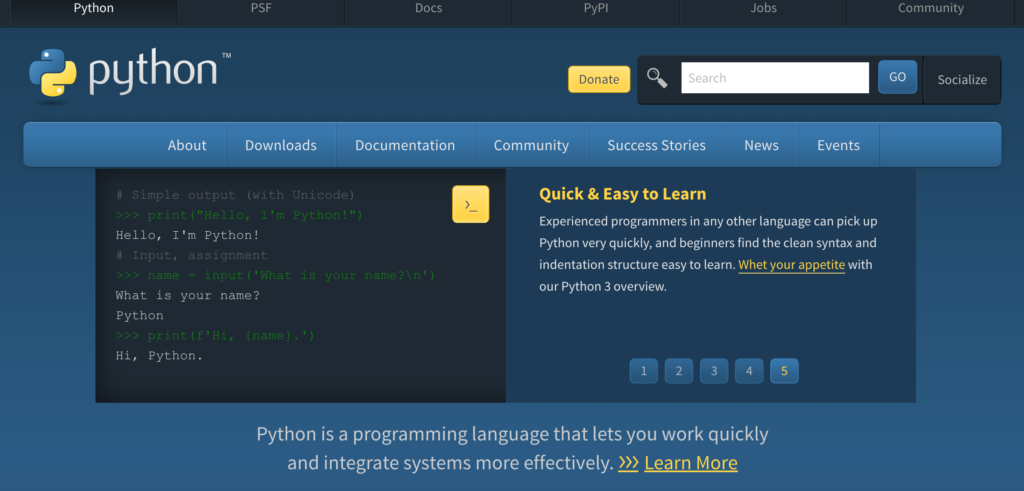
Python remains the best language for artificial intelligence in 2026 and continues to dominate AI development worldwide.
Why Python Is the Best Language for AI
- Easy syntax (ideal for beginners)
- Largest AI & ML ecosystem
- Strong community & documentation
- Used by Google, OpenAI, Meta, and Tesla
Popular Python AI Libraries
- TensorFlow
- PyTorch
- Scikit-learn
- Keras
- NumPy
- Pandas
Best Use Cases
- Machine learning
- Deep learning
- Computer vision
- NLP (chatbots, LLMs)
- AI research & startups
Read More: Gumloop AI
2. Java – Best for Enterprise AI Applications
Java is a powerful AI programming language widely used in large-scale, enterprise-level systems.
Why Java for AI Applications?
- High performance
- Platform independence
- Strong security
- Excellent scalability
Java AI Libraries
- Deeplearning4j
- Weka
- MOA
- Apache Mahout
Best Use Cases
- Enterprise AI systems
- Banking & fintech AI
- Android AI apps
- Large backend AI platforms
3. C++ – Best for High-Performance AI Systems
C++ is a low-level artificial intelligence programming language used when performance is critical.
Why C++ for Artificial Intelligence?
- Extremely fast execution
- Fine-grained memory control
- Used in real-time systems
Best Use Cases
- Robotics
- Game AI
- Autonomous vehicles
- Real-time AI engines
Popular C++ AI Libraries
- TensorFlow (core)
- OpenCV
- Caffe
4. R – Best for AI Data Science & Statistics
R is widely used in AI data analysis, research, and statistical modeling.
Why R Programming for AI?
- Excellent for data visualization
- Strong statistical capabilities
- Used in academia and research
R AI Libraries
- caret
- randomForest
- nnet
- xgboost
Best Use Cases
- AI research
- Data science
- Predictive analytics
5. JavaScript – Best for Web-Based AI
JavaScript is gaining popularity as an AI development language due to web and frontend AI needs.
Why JavaScript for AI?
- Runs in browsers
- Ideal for AI-powered web apps
- Strong Node.js ecosystem
JavaScript AI Libraries
- TensorFlow.js
- Brain.js
- Synaptic
Best Use Cases
- AI chatbots
- Browser-based AI
- AI SaaS products
6. Julia – Emerging AI Language in 2026
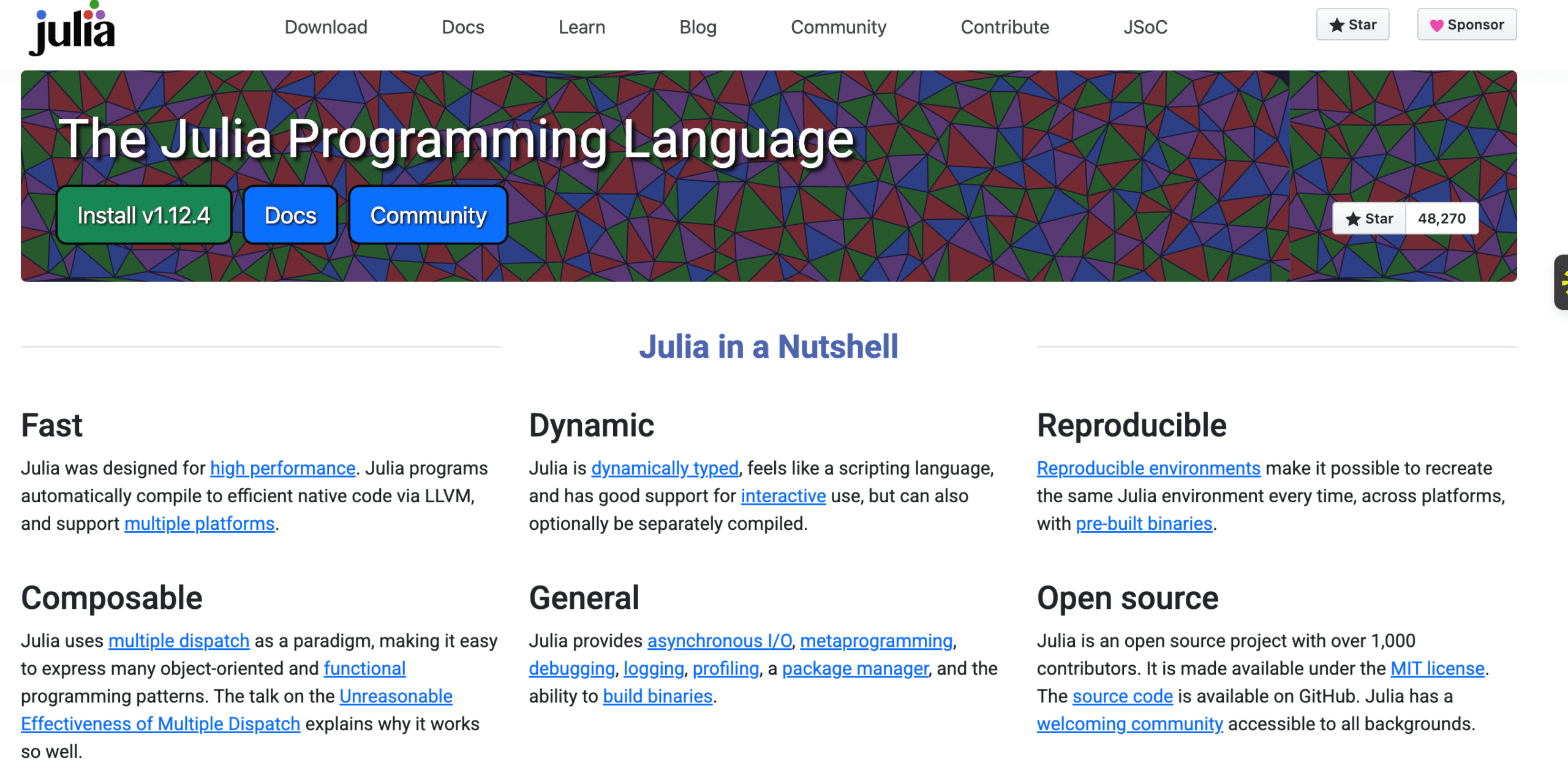
Julia is a newer AI programming language focused on speed and numerical computing.
Why Julia?
- Faster than Python
- Designed for ML & AI
- Growing adoption
Best Use Cases
- Scientific computing
- AI research
- High-performance ML
Which Language Is Best for AI? Making Your Choice?
Determining which language is best for AI depends entirely on your specific project requirements, existing expertise, and deployment environment.
For Beginners Learning AI
If you’re wondering about the best language to learn AI in 2026 as a newcomer, Python remains the clear answer. Its gentle learning curve, extensive tutorials, abundant libraries, and strong community support create the most supportive environment for AI language for beginners. Starting with Python allows you to quickly build functional AI projects while learning fundamental concepts.
For Specific AI Domains
The best language for machine learning projects focused on research and experimentation is Python, with R as a strong alternative for statistics-heavy work. For deep learning, Python’s PyTorch and TensorFlow frameworks make it the definitive choice. When building production AI systems requiring maximum performance, C++ or Java become strong candidates depending on platform requirements.
For Career Development
From a career perspective, learning Python as your primary AI programming language opens the most doors in 2026. However, the best language for AI engineers often includes proficiency in multiple languages. A Python foundation supplemented with Java for enterprise contexts or C++ for performance-critical applications creates a powerful skill combination.
Programming Languages Used in AI: The Complete Ecosystem
Modern AI development often employs multiple programming languages used in AI within single projects. Python might handle model development and training, C++ could power inference engines for deployment, and JavaScript might deliver the user interface. Understanding this polyglot reality helps developers make strategic language choices.
Top AI programming languages each bring unique strengths. Python for rapid development and experimentation, Java for robust enterprise deployment, C++ for performance optimization, R for statistical depth, and emerging options like Julia for computational intensity create a rich ecosystem. The best coding language for AI projects is often whichever language best matches your specific requirements and constraints.
The Future of AI Development Languages in 2026 and Beyond
The AI programming landscape continues evolving rapidly. Python’s dominance appears secure for the near future, but languages like Julia show promise for specific applications. Rust is gaining attention for safe, concurrent AI systems. Domain-specific languages optimized for AI workloads may emerge as the field matures.
The best programming language for AI ultimately depends less on absolute technical superiority and more on the match between language characteristics and project needs. Python’s combination of accessibility, comprehensive libraries, and community support makes it the default recommendation for most AI projects in 2026.
However, specialized needs justify other choices. Enterprise Java environments, performance-critical C++ applications, statistical R analyses, and experimental Julia implementations all have their place in the modern AI development toolkit. The most successful AI engineers develop proficiency in Python while maintaining awareness of when alternative languages provide significant advantages.
Conclusion
Selecting the best language for artificial intelligence requires balancing multiple factors including project requirements, team expertise, performance needs, and ecosystem support. Python stands as the best programming language for AI for most applications in 2026, offering unmatched libraries, community resources, and ease of use.
Whether you’re a beginner exploring which language is best for AI or an experienced engineer architecting complex systems, understanding the strengths and trade-offs of different AI programming languages enables better technical decisions. The AI field’s continued growth ensures demand for developers skilled in various AI development languages, making language learning a worthwhile investment in your technical future.