The internet connects billions of people every day. But when you write about it, do you call it a “web site” or a “website”?
It’s a small difference — just a space — yet it’s one of the most common questions for bloggers, writers, students, and businesses who care about correct language and SEO.
In 2025, the debate between “web site or website” still sparks curiosity, especially among those who want to sound professional and grammatically accurate online. Let’s break it down once and for all.
1. The Origin of the Term “Web Site”
When the World Wide Web first appeared in the early 1990s, the term “web site” was the correct and formal spelling. It was written as two separate words — “web” (referring to the World Wide Web) and “site” (a location or place).
So, in simple terms, “web site” literally meant “a location on the web.”
During the 1990s, this was the accepted form across newspapers, academic journals, and even early government publications. Back then, the internet was new, and language was still adapting to digital concepts.
For example:
- In 1994, most online articles referred to “web sites.”
- The Associated Press (AP) Stylebook, a key reference for journalists, also used “web site” until 2010.
So originally, “web site” wasn’t wrong — it was just a product of its time.
2. The Shift to “Website”
As the internet evolved, people began to use “website” as a single, compound word. This wasn’t a grammar revolution — it was simply how language naturally changes with common usage.
By the early 2000s, “website” became more common because it was easier to type, read, and understand.
Language experts and dictionaries started noticing the trend and made it official.
Key milestones include:
- 2004: Oxford English Dictionary updated “website” as the preferred spelling.
- 2010: AP Stylebook officially changed its recommendation from “Web site” to “website.”
- 2011: Merriam-Webster followed suit, recognizing “website” as the standard.
From that point on, “website” officially replaced “web site” in mainstream English.
3. Why “Website” Is Correct in 2025
Fast forward to 2025, and there’s no longer any confusion.
The correct, universally accepted spelling is “website” — one word, lowercase “w”.
Here’s why:
1. Language Evolution
Language changes with usage. Once most people adopted “website,” grammar authorities accepted it. This happens with many tech terms — think “email” (formerly “e-mail”) or “online” (once “on-line”).
2. SEO and Digital Consistency
From an SEO perspective, consistency matters.
Search engines like Google understand “web site” and “website” as the same term, but “website” is the modern standard used in billions of pages and backlinks. Using it helps your content align with current search norms.
Modern SEO practices rely heavily on automation and advanced tools. Using an AI SEO tool to scale agile solutions can further enhance your content optimization and website performance.
3. Professional and Modern Impression
Using “website” looks up-to-date and professional. Writing “web site” today can make your content feel outdated — like calling a smartphone a “mobile telephone.”
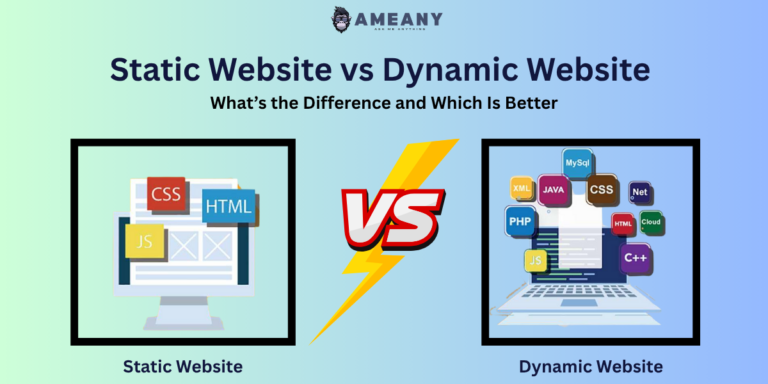
As websites continue to evolve in structure and technology, understanding the difference between static vs dynamic websites can also help you choose the right approach for modern development.
4. Accepted Across All Style Guides
Almost every modern style guide (AP, Chicago, Oxford, and Microsoft) now lists “website” as the correct form.
So if you’re writing in 2025, “website” is not just acceptable — it’s expected.
4. “Web Site” vs “Website”: What Dictionaries Say
Let’s look at what major dictionaries and style authorities say about “web site or website”:
| Source | Recommended Spelling | Notes |
| Oxford English Dictionary | Website | Officially recognized since early 2000s |
| Merriam-Webster | Website | “Web site” is considered archaic |
| AP Stylebook (since 2010) | Website | Lowercase “w” in all uses |
| Cambridge Dictionary | Website | “Web site” listed as old-fashioned |
| Chicago Manual of Style | Website | Modern and preferred form |
In every case, “website” wins.
5. Common Usage in the Real World
Search trends show the same result.
If you type both terms into Google Trends, you’ll see that “website” overwhelmingly dominates — almost 100 times more popular than “web site.”
Fun Fact:
In 2000, “web site” still appeared in about 60% of online documents.
By 2025, over 99% of web content uses “website.” So even if both are technically understood, “website” has become the global norm.
6. What About Capitalization? “Website” or “Web Site”?
In the early days, people often wrote “Web site” with a capital W, since “Web” referred to the “World Wide Web.”
However, as digital terminology became more familiar, capitalization was dropped.
Modern Rule:
- Always lowercase: website, web page, web browser, webmaster.
- Capitalize only when it’s part of a title or proper noun:
Example: “The Website Design Awards 2025.”
So yes — lowercase website is correct in both formal and informal contexts.
If you’re developing or designing sites, tools like an online code generator can help streamline your workflow when building modern websites.
7. Why It Still Matters to Know the Difference
You might wonder — if everyone says “website,” does it really matter anymore?
Actually, yes. Here’s why understanding “web site or website” still matters:
For Professional Writing
If you’re writing articles, documentation, or business content, using the modern spelling reflects your attention to detail and credibility.
For SEO and Branding
Consistency in terminology helps search engines understand your brand identity. Using outdated terms like “web site” could make your pages appear inconsistent or less trustworthy.
For Education and Language Learning
Students, writers, and ESL learners benefit from knowing how and why certain terms evolve — it’s part of mastering modern English communication.
Using tools like an error finder helps ensure your website is free from technical issues and maintains a professional impression.
8. Related Terms That Have Changed Over Time
The shift from “web site” to “website” is part of a broader trend in tech language.
Here are some other examples of words that evolved the same way:
| Old Form | Modern Form |
| On-line | Online |
| Web log | Blog |
| World Wide Web | The Web / Internet |
| Cell phone | Smartphone |
Language simplifies as it adapts to everyday use — and “website” is a perfect example of that.
9. How to Use “Website” Correctly in Sentences
To help you apply it naturally, here are a few examples of how to use “website” in 2025:
- I’m building a new website using an easy-to-use website builder to speed up the development process.
- Her portfolio website showcases her photography work.
- The company website was redesigned to improve SEO.
- Always make sure your website loads quickly on mobile devices.
Avoid this outdated form:
- I’m designing a new web site for my brand.
Even though people will understand it, it feels outdated and less polished.
10. Final Verdict: Website or Web Site in 2025?
The answer is clear: “Website” is the correct, modern, and universally accepted spelling in 2025.
“Web site” may have historical roots, but it’s now considered outdated in both grammar and SEO. Whether you’re a blogger, student, business owner, or digital marketer — always go with website.
It’s clean, correct, and future-proof.
Quick Summary
| Feature | “Web site” | “Website” |
| Origin | Early 1990s | Early 2000s |
| Official Use | Obsolete | Standard |
| Accepted by AP, Oxford, Merriam-Webster | ❌ No | ✅ Yes |
| SEO-Friendly | ❌ Less | ✅ Yes |
| Professional Impression | Outdated | Modern |
Conclusion
The debate between “web site or website” may seem small, but it reflects how language evolves alongside technology.
In 2025, “website” stands as the correct, modern, and universally accepted form — both grammatically and digitally.
So whether you’re writing blog posts, product descriptions, or academic papers — drop the space, keep it simple, and always use “website.”
Frequently Asked Questions (FAQ)
Technically, yes — it’s not incorrect, but it’s outdated. All major dictionaries and style guides now prefer “website” as one word.
“Website” started gaining popularity in the early 2000s and was officially adopted by the AP Stylebook in 2010. Since then, it’s been the global standard.
“Website” is far better for SEO. It’s the dominant spelling across the web and aligns with how users search online. Using “website” improves content relevance and consistency.
No, Google recognizes both terms. However, since “website” appears more frequently in search queries and backlinks, it ranks better and looks more natural to users.
Yes, it’s a good idea. Updating “web site” to “website” modernizes your content, improves readability, and aligns your pages with SEO best practices in 2025.